Rechercher dans ce blog

Wednesday, October 5, 2022

Hogan to be called as witness in federal case against former aide - Maryland Matters

Roy McGrath, then Governor Lawrence J. Hogan Jr.’s chief of staff, at a conference call of the governor’s Cabinet in the Maryland State House in June 2020. Photo by the Executive Office of the Governor/Flickr.

By Kate Ryan

Maryland Gov. Larry Hogan (R) is on the witness list in the criminal case against a former aide.

Federal court documents show that jurors in the fraud and embezzlement case against Roy McGrath have been asked whether Hogan’s appearance as a witness for the prosecution would impact their ability to be fair and impartial.

McGrath, who briefly served as Hogan’s chief of staff, faces charges including misconduct in office, theft and wire fraud. News of Hogan’s expected appearance as a witness was first reported by The Daily Record.

When he resigned from the Maryland Environmental Service in 2020, McGrath got a severance package of more than $322,000, an amount equaling an entire year’s salary.

McGrath insisted the arrangement was cleared by Hogan, and is accused of falsifying a document to back up his claim.

Hogan has strenuously denied knowing about the arrangement made before McGrath came on as his chief of staff. McGrath resigned his post in the Hogan administration after less than two months on the job.

When asked about Hogan’s expected appearance as a witness, Michael Ricci, Hogan’s communications director, said in statement that “our office has been actively assisting in these ongoing investigations” over the past two years.

Ricci added that the governor’s office is “confident that the justice system will uphold the public trust.”

McGrath also faces charges in Anne Arundel County Circuit Court of illegally recording phone conversations with the governor and other administration officials. In Maryland, it is illegal to record conversations without the consent of all parties.

Federal prosecutors are hoping to introduce one of those phone calls into evidence in their case against McGrath but bar the rest, saying they are not relevant to the case against the former Hogan aide.

The call the federal prosecutors want to allow involves an August 2020 conversation in which McGrath made statements related to his severance payments, according to court documents.

McGrath has a federal trial date of Oct. 24. Next June, he also faces a trial related to the taping of phone calls.

As part of Maryland Matters’ content sharing agreement with WTOP, we feature this article from Kate Ryan. Click here for the WTOP News website. 

Adblock test (Why?)

Article From & Read More ( Hogan to be called as witness in federal case against former aide - Maryland Matters )
https://ift.tt/rClyB4o
Case

Tribes ask US Supreme Court to hear case over destruction of sacred site near Mount Hood – Oregon Capital Chronicle - Oregon Capital Chronicle

Members of two Northwest tribes want the federal government to restore a sacred site near Mount Hood that was destroyed in a highway expansion project 14 years ago. 

After the case was dismissed by two lower courts, the tribes on Tuesday took it to the highest court in the country. 

Members of the Confederated Tribes and Bands of the Yakama Nation and the Confederated Tribes of the Grande Ronde have asked the U.S. Supreme Court to hear the case of Slockish v. U.S. Department of Transportation. The Bureau of Land Management and the Advisory Council on Historic Preservation are also named as defendants. 

Wilbur Slockish is one of four petitioners who brought the case, and is the hereditary chief of the Confederated Tribes and Bands of the Yakama Nation. Other petitioners include Carol Logan, a member of the Confederated Tribes of Grand Ronde and a spiritual practitioner and the nonprofits Cascade Geographic Society and Mount Hood Sacred Lands Preservation Alliance.

The case centers around a 2008 decision by the U.S. Department of Transportation, the Bureau of Land Management and the Oregon Department of Transportation to build a turn lane off Highway 26 about 13 miles from Government Camp. The agencies said this was for safety reasons after a number of traffic accidents occurred nearby, some resulting in death. The federal agencies granted the state transportation agency an easement to build the turn lane, which was on federal land. 

But the area is also one of great religious and spiritual significance to tribal members. 

Highway 26 follows an ancient Native American trading route, and the new turn lane was built on an acre of old growth trees atop an ancient burial site, campground and stone altar sacred to the tribes.

The burial site is known as Ana Kwna Nchi Nchi Patat, which translates to “Place of Big Big Trees.”

Until the destruction from the highway expansion, Native Americans still visited, prayed and held ceremonies there.

The petitioners said the decision to build the turn lane on a sacred site violates the Religious Freedom Restoration Act, a 1993 law that prohibits any state or federal agency from substantially burdening a person’s exercise of religion and the Free Exercise Clause of the Constitution, mandating Congress make no law prohibiting the free exercise of any religion. 

The tribal members want the court to require the federal agencies remove an embankment placed over the ancient burial ground, to replant the trees torn down and to allow the reconstruction of the stone altar.

In a statement, Logan said, “All we want is the return of our sacred artifacts, the rededication of the area for our ancestors and the promise that we can continue to worship as our tribes have done for centuries.” 

The tribes sued in 2008 after construction of the lane had finished, but the case moved through the courts for years while negotiations were ongoing and ultimately failed to resolve the case.  

It was dismissed by two lower district and circuit courts in 2018 and 2021 because the site is on federal land and the project was overseen by a federal agency. 

The Supreme Court will decide sometime between this November and January 2023 whether to hear the case. It is the last chance the tribes have to seek legal restoration of the lost site.

The tribes are represented by Luke Goodrich of Becket, a nonprofit law firm based in Washington D.C. that primarily takes cases of religious freedom. 

Goodrich said that he is not concerned the court’s conservative majority will ignore or dismiss the case. 

The Supreme Court has repeatedly affirmed the importance of religious freedom for people of all faiths – including ruling in favor of religious freedom claims in 22 of the last 23 religious freedom cases it has heard over the last decade,” Goodrich said in an email. “We are optimistic that the court will see the need to afford equal protection to Native Americans and their ability to use traditional sacred sites.”

Adblock test (Why?)

Article From & Read More ( Tribes ask US Supreme Court to hear case over destruction of sacred site near Mount Hood – Oregon Capital Chronicle - Oregon Capital Chronicle )
https://ift.tt/GPr4NYT
Case

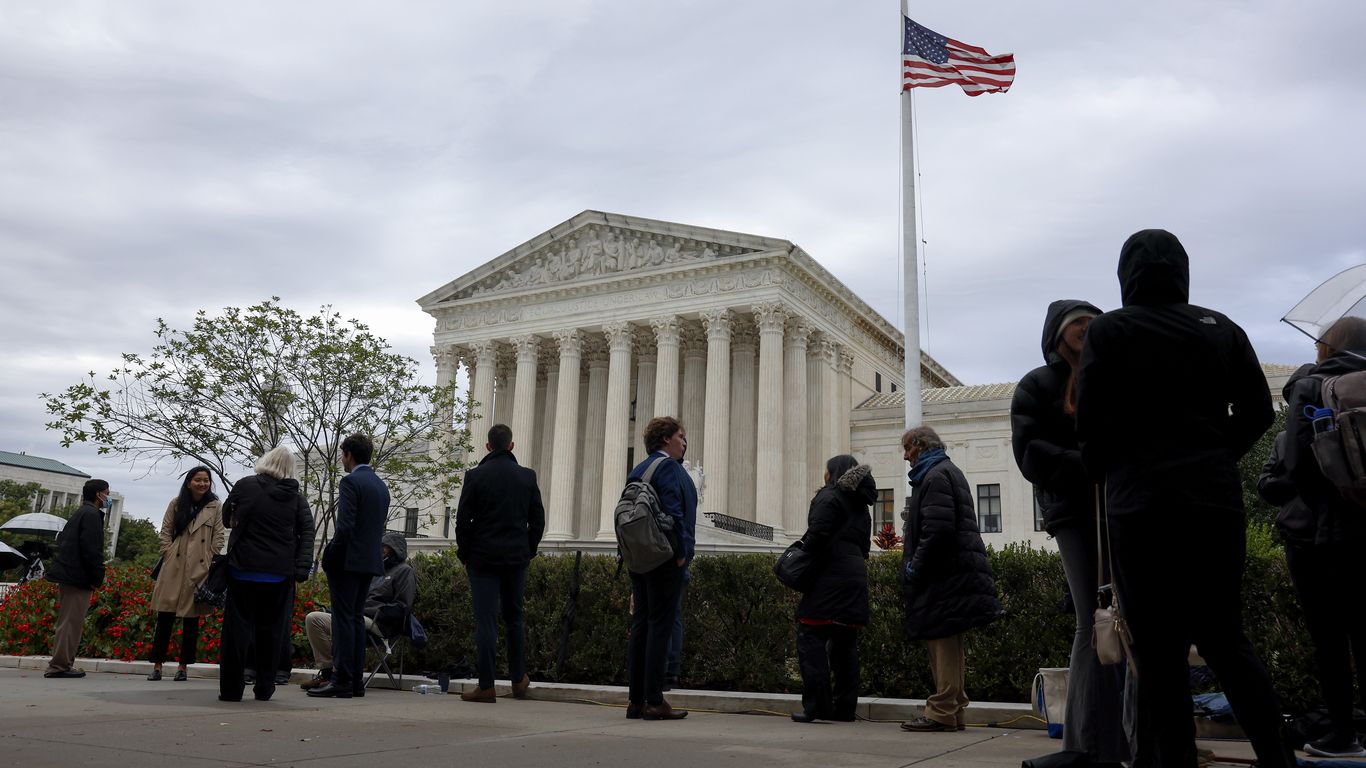
Alabama case that could limit Voting Rights Act heard at U.S. Supreme Court - Georgia Recorder

[unable to retrieve full-text content]

Alabama case that could limit Voting Rights Act heard at U.S. Supreme Court  Georgia Recorder Article From & Read More ( Alabama case that could limit Voting Rights Act heard at U.S. Supreme Court - Georgia Recorder )
https://ift.tt/hXGQ3Uw
Case

Monday, October 3, 2022

Supreme Court takes up case testing Section 230 immunities - Axios

The Supreme Court decided Monday to take up a case that will test the immunity social media companies have from lawsuits over content posted by users.

Why it matters: The case appears to be the court's first test of Section 230 of the Communications Decency Act, a controversial provision that shields online platforms from lawsuits over moderation practices and user-posted content.

  • Industry groups and supporters of Section 230 argue that its protections make it possible for website publishers and app services to use and moderate user-contributed content in ways that benefit their customers and society.

The big picture: The case, Reynaldo Gonzalez, et al v. Google LLC, alleges YouTube aided and abetted the killing of a 23-year-old American woman during the 2o15 ISIS attacks in Paris that killed 130 people and injured hundred more.

  • The plaintiffs, the surviving family members of Nohemi Gonzalez, allege Google "provided material support to ISIS" by allowing it to use YouTube "as a tool to commit terrorism."
  • Google has moved to dismiss the lawsuit, arguing the claims are barred under Section 230.
  • Conservative Justice Clarence Thomas wrote in an October 2020 filing that Section 230 should be narrowed, saying internet companies have been granted "sweeping protection" and that courts are reading more comprehensive immunity into Section 230 than was intended.

Thought bubble, via Axios' Ashley Gold: If the Supreme Court erodes Section 230 immunity, it could create a nightmare scenario not just for Big Tech but for anyone runs a website with user-generated content.

The big picture: Members of Congress in recent years have repeatedly tried to reform or repeal Section 230.

  • Republicans, including former President Donald Trump, typically claim Section 230 allows digital platforms to censor conservative views, while Democrats have argued it should be revisited to make tech companies more accountable for the proliferation of misinformation and hate speech.

Go deeper: Florida appeals to Supreme Court over controversial social media law

Adblock test (Why?)

Article From & Read More ( Supreme Court takes up case testing Section 230 immunities - Axios )
https://ift.tt/P9KOQu4
Case

Sunday, October 2, 2022

Supreme Court to hear case that could have massive impact on US water quality - The Hill

The Supreme Court on Monday will hear arguments of a case between Idaho landowners and the Environmental Protection Agency (EPA), a dispute that could redefine the scope of the country’s clean water regulations.  

The first case of the justices’ new term, landing just ahead of the Clean Water Act’s 50th anniversary, will feature arguments about wetlands and when they can or cannot be regulated by the federal government.  

Although technical in nature, the legal dispute could have broad implications for the country’s water quality if the 6-3 conservative majority court uses the case to narrow the EPA’s regulatory reach.  

“If that’s what the Supreme Court should decide, we’re basically rolling back the clock 50 years,” said Rep. Peter DeFazio (D-Ore.), who chairs a House panel on water resources and the environment. “That would remove 50 percent of our critical wetlands, and 70 percent of our rivers and streams from federal protection.” 

The case began in 2007 when Michael and Chantell Sackett were told they needed a federal permit to build a home on land they owned because it contained wetlands, prompting the Sacketts to sue.  

A federal court, siding with the U.S. government, ruled that the wetlands on the Sacketts’ property contained a “significant nexus” with other regulated waters, meaning the couple would need authorization to build there.  

The Sacketts are now urging the Supreme Court to discard the “significant nexus” threshold. Instead, their petition favors a separate test from former Justice Antonin Scalia that called for the waters to have a “continuous surface water connection” — a higher threshold that would apply to fewer wetlands. 

The stakes of this case, however, go far beyond one property dispute. It attracted briefs from environmental groups, which argue that it would hamper the government’s ability to keep people safe from pollution, as well as industries like farming, mining, construction and oil and gas, which support the deregulatory effort.  

“This is a very, very, big deal for the Clean Water Act. It will determine, likely, whether the Clean Water Act can protect half of the water bodies in the country, and if it can’t, meeting the water quality goals of the law that we all count on will be virtually impossible,” said Jon Devine, who leads the Natural Resources Defense Council’s federal water policy team. 

The case appears to mirror regulatory differences between the Trump administration’s efforts to limit regulations to just wetlands with continuous surface water connections to other regulated waters, and the Obama administration’s regulations, which applied the significant nexus test.  

A total of 51 percent of the country’s wetlands would not be protected under the Trump-era rule, according to a slideshow obtained by E&E News. 

The Biden administration has proposed to regulate some wetlands that meet the significant nexus standard.  

And while the Sacketts’ petition to the court appears to be in support of the continuous surface water test, in their opening court brief, they propose a separate test. 

They say that a wetland should be “inseparably bound up” with another regulated water and also subject to Congress’s authority over interstate waters.  

Damien Schiff, a lawyer representing the Sacketts said that abiding by the Clean Water Act can be significantly burdensome, both in the application process itself and in the requirements to mitigate environmental damage.  

“Whenever the Clean Water Act applies, it does add a significant financial burden, not just because there is a lot of costs involved in the application process … but also just simply the cost of compensatory mitigation,” said Schiff, a senior attorney at the Pacific Legal Foundation.  

He said that the Army Corps of Engineers “might very well issue a permit, but typically not only is the permit issued for a much smaller project than was originally requested but it’s always accompanied by a pretty significant compensatory mitigation obligation and that can run into the hundreds of thousands if not millions of dollars.” 

A looser test would be expected to apply to fewer wetlands, allowing individuals and corporations to act there without EPA oversight.  

Under the current system, many polluters are also not necessarily blocked from carrying out activities in regulated waters.  

Instead, they may need to either apply for a permit that contains stipulations that they follow environmental safeguards, or follow existing stipulations in a “general permit” that gives a blanket waiver to certain activities.  

But environmentalists say that while pollution still occurs when permits are in place, the stipulations they offer are important for averting the worst damages.  

“This case is not about prohibiting construction or development, it’s about what safeguards are in place when someone does so,” Devine said.  

Environmentalists say that this pollution may end up in America’s drinking water and also harm fish that people catch for consumption. And while many public water systems are treated to prevent pollution, some people get their water from private wells, which may not get the same level of treatment.  

“Drinking water does have standards, but that doesn’t mean that all those standards are perfect and the pollution that comes in through those sources means more cost of treatment. It means that people who live on wells or in areas where the water treatment systems aren’t as big or fancy or as expensive are going to suffer,” said Sam Sankar, senior vice president of programs at Earthjustice.  

Sankar said his organization has 18 tribes as clients, and many of them will face “direct impacts.” 

The court began its work Monday after an epochal term in which the six Republican-appointed justices advanced an aggressive conservative legal agenda.  

The case will be the first that is heard by Ketanji Brown Jackson in her tenure as a Supreme Court justice.  

Although overshadowed by the court’s overruling of Roe v. Wade, last term saw the court vote 6-3 to pare back federal agency power in West Virginia v. EPA, a case that reined in the government’s authority to regulate carbon emissions from power plants. 

Court watchers believe the conservative majority court will continue its rightward trajectory this term. 

“There’s no reason to think this coming term, or any term in the foreseeable future, will be any different,” Irv Gornstein, executive director of Georgetown Law’s Supreme Court Institute said recently. “On things that matter most, get ready for a lot of 6-3s.” 

Adblock test (Why?)

Article From & Read More ( Supreme Court to hear case that could have massive impact on US water quality - The Hill )
https://ift.tt/EFpftsg
Case
Saturday, October 1, 2022

Trump at Center of Oath Keepers Novel Defense in Jan. 6 Case - U.S. News & World Report

[unable to retrieve full-text content]

Trump at Center of Oath Keepers Novel Defense in Jan. 6 Case  U.S. News & World Report Article From & Read More ( Trump at Center of Oath Keepers Novel Defense in Jan. 6 Case - U.S. News & World Report )
https://ift.tt/iUdP65o
Case

In Case You Missed It: Florida Response to Hurricane Ian Continues - FloridaJobs.org

An equal opportunity employer/program.  Auxiliary aids and services are available upon request to individuals with disabilities.
All voice telephone numbers on this website may be reached by persons using TTY/TDD equipment via the Florida Relay Service at 711.

Adblock test (Why?)

Article From & Read More ( In Case You Missed It: Florida Response to Hurricane Ian Continues - FloridaJobs.org )
https://ift.tt/l1gz2kt
Case

Search

Featured Post

Opinion | The Case for ‘Hibernating’ During Winter - The New York Times

As the days shorten and the dark hours stretch, every impulse in me is to slow down, get under a blanket and stay there till spring. In a...

Postingan Populer