As the days shorten and the dark hours stretch, every impulse in me is to slow down, get under a blanket and stay there till spring. In a 2020 piece for The Atlantic exploring the possibility of human hibernation, James Hamblin wrote that as the winter months come upon us, “Maybe our minds and bodies are telling us we’re not supposed to be fighting so hard.” As the New York winter hardened, he resolved: “It is absolutely ridiculous that we don’t hibernate.” Hamblin makes clear that we can’t actually hibernate all winter long, though short periods of human hibernation are theoretically possible and could be useful for certain medical treatments. Still, his basic point is spot on.
Our urge to decelerate around late autumn and throughout winter ought to be heeded. The instinct to rest more in that quiet space of time between when the last leaves fall and the first fireflies arrive resonates with ancient human and biological rhythms. We should listen to it.
A 2020 survey by the American Academy of Sleep Medicine showed that 34 percent of U.S. adults report sleeping more in winter. Still, according to the C.D.C., a third of U.S. adults are not getting enough sleep. To be sure, some people have medical conditions that keep them from sleeping. But most of us could get more sleep, and know we should get more sleep, but still stay up longer to squeeze some more doomscrolling, work or entertainment into the day. Lack of sleep is linked to increased rates of heart disease, Type 2 diabetes and obesity. It also makes us angrier, more unhappy and less capable of creative, compassionate and intelligent thought. America’s sleeplessness is likely making outrage culture, political polarization and general incivility worse.
Our cultural resistance to sleep reveals a disordered relationship with our bodies and our human limitations. Arianna Huffington has lamented that in the professional world, “sleep is somehow a sign of weakness and that burnout and sleep deprivation are macho signs of strength.” This seasonal nudge to rest, then, isn’t only a physical need; it is an invitation to a spiritual practice, a better way of understanding ourselves and our place in the world. Sleep is portrayed in the Christian tradition as a grace and even an act of worship. The Psalmist says that he can sleep peacefully because God is our protector (Psalm 4). Sleep here is a declaration of trust in God. The Psalmist also says that God “gives his beloved sleep” (Psalm 127).
The theologian James Bryan Smith wrote that “the number one enemy” of “spiritual formation today is exhaustion.” He also names sleep as “the perfect example” of the relationship between discipline and grace. “You cannot force your body to sleep. Sleep is an act of surrender,” he said. “It is admitting that we are not God (who never sleeps) and that is good news. We cannot make ourselves sleep, but we can create the conditions necessary for sleep.”
To sleep, we must yield to our limitations. We are needy and fragile, yet we can rest because it is not by our own efforts, abilities or successes that we keep ourselves, our lives or the world intact.
So maybe we cannot hibernate all winter long, but we can give ourselves permission to crawl in bed earlier and hit the snooze button with impunity.
We can also make more time to sleep during the day. With all the benefits naps offer, they should be our national winter pastime, if not added to the panoply of winter competitive sports.
“If you embrace the need to nap rather than pushing through,” writes molecular biologist John Medina in his book “Brain Rules, “your brain will work better afterwards.” He points to a NASA study that showed that a 26-minute nap reduced crew members’ lapses in awareness by 34 percent compared with non-nappers.
Another study that Medina cites showed that a 45-minute nap boosted cognitive performance for the next six hours. This is why some companies, like Google and Nike, offer sleep pods or nap rooms. But napping shouldn’t be an option only for the lucky few in select corporations. I once worked as a medical scheduler, and each day one of my co-workers could be found on his lunch break nodding off in the break room or sneaking off to his car to catch a few winks. What if this were more commonplace and acceptable? What if our employer provided him space so he didn’t have to sleep with his head propped up against the vending machine?
Through her popular Nap Ministry and her new book, “Rest Is Resistance,” Tricia Hersey encourages people to nap as a way to push back against a compulsive work culture that births both injustice and exhaustion. “I judge success by how many naps I took in a week,” she told The Times. Helen Hale, the creative director of the Nap Ministry, said that when we intentionally embrace rest, we experience “a very real kind of withdrawal from our cultural addiction to productivity.”
Naps also hold surprising biblical significance. In one of the more famous biblical naps, Elijah is running for his life, escaping political retaliation. He despairs and gives up. He’s had it. Resentful and bitter, he prays to die, lies down and takes a nap. Only then does an angel show up and help him. He is renewed enough after napping to find the will to live and continue on his journey. (Haven’t we all been there?)
In the Gospels, before Jesus miraculously calms a storm, he first has to be woken up because he has dozed off on the boat. Here, a man who is powerful enough to stop gale-force winds with his voice still nods off after a long morning. Napping in this passage is also a theological statement. It’s a physical sign of faith. While everyone else on the boat is terrified, Jesus is slack-jawed asleep. Amid a turbulent storm, Jesus is at peace, out like a light.
Napping is not only a way to honor our bodies’ circadian rhythms — giving in to that post-lunch lull we all know so well. It can also be a powerful habit that teaches us to release our death grip on efficiency and control. Anne Lamott wrote, “Almost everything will work again if you unplug it for a few minutes, including you.” This season, if you are feeling weary, do not underestimate the spiritual power of a long winter’s nap.
Tish Harrison Warren (@Tish_H_Warren) is a priest in the Anglican Church in North America and the author of “Prayer in the Night: For Those Who Work or Watch or Weep.”
BATON ROUGE, La. (WAFB) - The agency tasked with keeping kids safe across the state, the Department of Children and Family Services (DCFS), is now telling the public exactly how they failed another child, only after the WAFB I-TEAM exposed the botched handling of a case that left 1-year-old Jahrei Paul dead.
Less than 24 hours after a DCFS worker spoke exclusively to the WAFB I-TEAM, blowing the lid on the department’s most recent disastrous and deadly fumble, an agency spokeswoman now says it was a mix-up that allowed the anonymous tip that drugs were being used around the child to fall through the cracks.
The worker chose to speak with WAFB under the promise of anonymity.
“It’s embarrassing. It’s unacceptable. It’s a very poor reflection upon our agency,” the DCFS worker said.
DCFS officials admit they received the tip on October 20, 2022. That is roughly 10 days before the baby died. A manager who had been recently reassigned to take on cases resigned, then sent a message to her supervisor so the case could be passed on to someone else and alerted her that no contact had been made. That supervisor was out sick and did not get back to her email until after the baby was already dead.
WAFB’s Scottie Hunter asked the DCFS worker how something like this continues to happen on the state’s watch.
“Nothing is done.. or shall I say, whatever has been done has not been effective,” the worker said.
The agency also admits they had previously investigated the child’s mother for alleged marijuana use during her pregnancies but they found no indication of continued drug use. The agency says they followed state guidelines to investigate claims about the mom’s potential drug use but claims they never got any other complaints against the mother nor did they receive any other reports of abuse or neglect regarding the mom.
The worker who spoke with WAFB agrees that they are seeing more cases come across their desk like this but she believes more could be done.
”There are a lot of children born or infants born with fentanyl in their system along with other drugs.. methamphetamines, cocaine.. so it’s not something that is uncommon; however it is something that should be acted on,” the worker added.
Through their current investigation, the agency says three other children tied to the case have been taken into custody but the agency stopped short of saying what— if any— action has been taken for the case manager who missed the email to hand off the case. The worker who spoke with WAFB says someone needs to answer for what’s happened.
”I do believe that they need to be terminated,” she said. “I mean how could they get away with this? If we’re on a report and we haven’t done something and we’re two days overdue, we’re going to be slapped on the hand and nothing seems to happen.”
This marks the second time in recent months that DCFS has failed a child. Back in August, the agency announced policy changes and other steps to get a handle on the problems all while saying they’ve been slammed with cases and are finding it harder to recruit and retain workers. That was in response to them dropping the ball on a similar case, allowing another child, 2-year-old Mitchell Robinson to die after he overdosed three times.
The worker who spoke with WAFB calls these repeat failures frustrating and tells adds that morale is at an all-time low for those workers who stay and try to do the right thing.
”It’s the mindset. It’s what people think of us and for those that go out and do a very good job, of course it’s disheartening,” the worker said.
A DCFS spokeswoman released the following statement regarding the child’s death:
DCFS received a report to the child abuse hotline on October 21, 2022, by an anonymous reporter alleging that the mother was using marijuana in the presence of her children, including on October 20, 2022. On October 21, 2022, the case was immediately assigned to a supervisor who was recently reassigned to caseworker duties to help with the high influx of cases. Within 3 days of this assignment she put in her resignation, but continued to work for another 5 days to complete case activities. Her last day was Sunday, October 30, 2022. On Friday, October 28, 2022 she sent an email to her manager advising of no contact on this case. The manager was on sick leave on Friday the 28th, and returned to work on Monday, October 31. After testifying in court proceedings, she returned to the office and began reviewing emails and reassigning cases. In the process of doing this, she received notification that J’ahrei died.
DCFS previously investigated the mother of J’ahrei Paul due to marijuana use during her pregnancies. Louisiana law requires the Department of Children and Family Services to initiate an investigation of neglect when a newborn is exposed to any illegal substance or other substance used in an unlawful manner. There were no indications of other drug use, and no other substances were discovered in standard meconium tests. The agency initiated investigations according to state law, and there were never any concerns reported by medical professionals regarding the care of her children. There were never any other allegations or reports of abuse and neglect on these children.
During our investigation, the Agency learned that the mother was incarcerated in Texas during the time of this anonymous report and had been since at least August 2022. J’ahrei’s mother and father were not residing together prior to her incarceration. Case notes indicate that the mother made arrangements for the children to reside with their father while she was incarcerated. The agency never received any reports alleging abuse or neglect by J’ahrei’s father; this includes any concerns related to substance use.
It was learned through investigation that the children were residing with their father at the time of the intake. The father of J’ahrei had no previous investigations as a perpetrator of abuse and/or neglect. Since this time, the other three children have been removed and placed in the custody of the department pending the completion of the investigation.
The department will answer questions from the press about this information and the department’s response to the case at 10:30 Monday, November 7, 2022, in the Iberville Building, 627 North Street, Baton Rouge, Louisiana.
Greetings from Phoenix. With the Trail Blazers heading out for their first extended road trip of the season, which starts with a back-to-back versus the Suns at Footprint Center, wanted to get you squared away with another edition of The Brief Case podcast, which you can listen and subscribe to below...
After our usual update on where the Trail Blazers rank in terms of Offensive Rating, Defensive Rating and Net Rating, we discuss the loss to the Memphis Grizzlies on Wednesday (I mistakenly said Thursday at one point), the two-minute report that showed the Trail Blazers suffered from two incorrect calls and one missed call in that loss and whether those reports have value, an injury update for Damian Lillard and Gary Payton II before wrapping up with a discussion of the impending trip and what it would mean to go .500 on this first real sojourn of the season.
LOS ANGELES -- Charlotte Hornets restricted free agent Miles Bridges pleaded no contest to a felony domestic violence charge Thursday morning in Los Angeles Superior Court and was sentenced to three years of probation, but no jail time, as part of a deal with prosecutors.
The no-contest plea means Bridges, who was present in court, is accepting the punishment and the conviction without formally admitting guilt in the case. Bridges was accused of assaulting his then-girlfriend in front of their two children in May. In July, Los Angeles County District Attorney George Gascon's office filed three felony charges against Bridges, who initially pleaded not guilty to all three.
On Thursday, Bridges' attorney and the DA's office reached an agreement that he plead no contest to one felony count of injuring a child's parent and that the other two counts be dismissed. The felony charges also included "an allegation of causing great bodily injury on the domestic violence victim," and that allegation was dismissed as part of the plea agreement.
The two dismissed counts were charges of child abuse under circumstances or conditions likely to cause great bodily injury or death. The DA's July release said the children were present for the alleged assault but did not otherwise specify what the child abuse counts stemmed from.
During his three-year probation, Bridges, 24, will be required to complete 52 weeks of domestic violence counseling and 52 weeks of parenting classes, serve 100 hours of community service and undergo weekly narcotics testing with marijuana allowed only if there is a valid doctor's prescription. He cannot own any guns, ammunition or any weapons. He also will have to pay a restitution fine of $300 (with a restitution hearing scheduled for Jan. 13) and a domestic violence fine of $500 and obey the terms of a 10-year protective order, staying 100 yards away from and having no contact with the woman. Bridges and the woman maintain custody over their two children, and any visitation or exchange of children must be done peacefully and through a neutral third party.
"We believe this resolution was the best avenue to hold Mr. Bridges accountable for his conduct," the Los Angeles County District Attorney's Office said in a statement. "We also understand through the victim's representatives that the victim wanted an expedited resolution of the case. The victim and her representatives were consulted about the proposed resolution and agreed with the outcome of the case."
Bridges' attorney declined comment.
At the moment, Bridges remains unsigned, but if he were to sign with a team, the NBA, under the collective bargaining agreement, has the right to suspend, fine, dismiss or disqualify him from any further association from the league because he pleaded no contest.
An NBA spokesperson said Thursday that the league continues to review the matter.
The Hornets said in a statement they "will continue to gather information before determining any potential next steps."
Bridges was arrested June 29 by Los Angeles police and released on $130,000 bond.
Before his arrest, the Hornets had extended the 6-foot-7 Bridges a qualifying offer, which allows them a chance to match any offer sheet he signs with another team. Last season was his fourth in the NBA.
LOS ANGELES -- Charlotte Hornets restricted free agent Miles Bridges pleaded no contest to a felony domestic violence charge Thursday morning in Los Angeles Superior Court and was sentenced to three years of probation, but no jail time, as part of a deal with prosecutors.
The no-contest plea means Bridges, who was present in court, is accepting the punishment and the conviction without formally admitting guilt in the case. Bridges was accused of assaulting his then-girlfriend in front of their two children in May. In July, Los Angeles County District Attorney George Gascon's office filed three felony charges against Bridges, who initially pleaded not guilty to all three.
On Thursday, Bridges' attorney and the DA's office reached an agreement that he plead no contest to one felony count of injuring a child's parent and that the other two counts be dismissed. The felony charges also included "an allegation of causing great bodily injury on the domestic violence victim," and that allegation was dismissed as part of the plea agreement.
The two dismissed counts were charges of child abuse under circumstances or conditions likely to cause great bodily injury or death. The DA's July release said the children were present for the alleged assault but did not otherwise specify what the child abuse counts stemmed from.
During his three-year probation, Bridges, 24, will be required to complete 52 weeks of domestic violence counseling and 52 weeks of parenting classes, serve 100 hours of community service and undergo weekly narcotics testing with marijuana allowed only if there is a valid doctor's prescription. He cannot own any guns, ammunition or any weapons. He also will have to pay a restitution fine of $300 (with a restitution hearing scheduled for Jan. 13) and a domestic violence fine of $500, and obey the terms of a 10-year protective order, staying 100 yards away from and having no contact with the woman. Bridges and the woman maintain custody over their two children, and any visitation or exchange of children must be done peacefully and through a neutral third party.
"We believe this resolution was the best avenue to hold Mr. Bridges accountable for his conduct," the Los Angeles County District Attorney's Office said in a statement. "We also understand through the victim's representatives that the victim wanted an expedited resolution of the case. The victim and her representatives were consulted about the proposed resolution and agreed with the outcome of the case."
Bridges' attorney declined comment.
At the moment, Bridges remains unsigned, but if he were to sign with a team, the NBA, under the collective bargaining agreement, has the right to suspend, fine, dismiss or disqualify him from any further association from the league because he pleaded no contest.
Bridges was arrested June 29 by Los Angeles police and released on $130,000 bond. The Hornets and NBA both said they were aware of the charges, with the league noting it is investigating the allegations.
Before his arrest, the Hornets had extended the 6-foot-7 Bridges a qualifying offer, which allows them a chance to match any offer sheet he signs with another team. Last season was his fourth in the NBA.
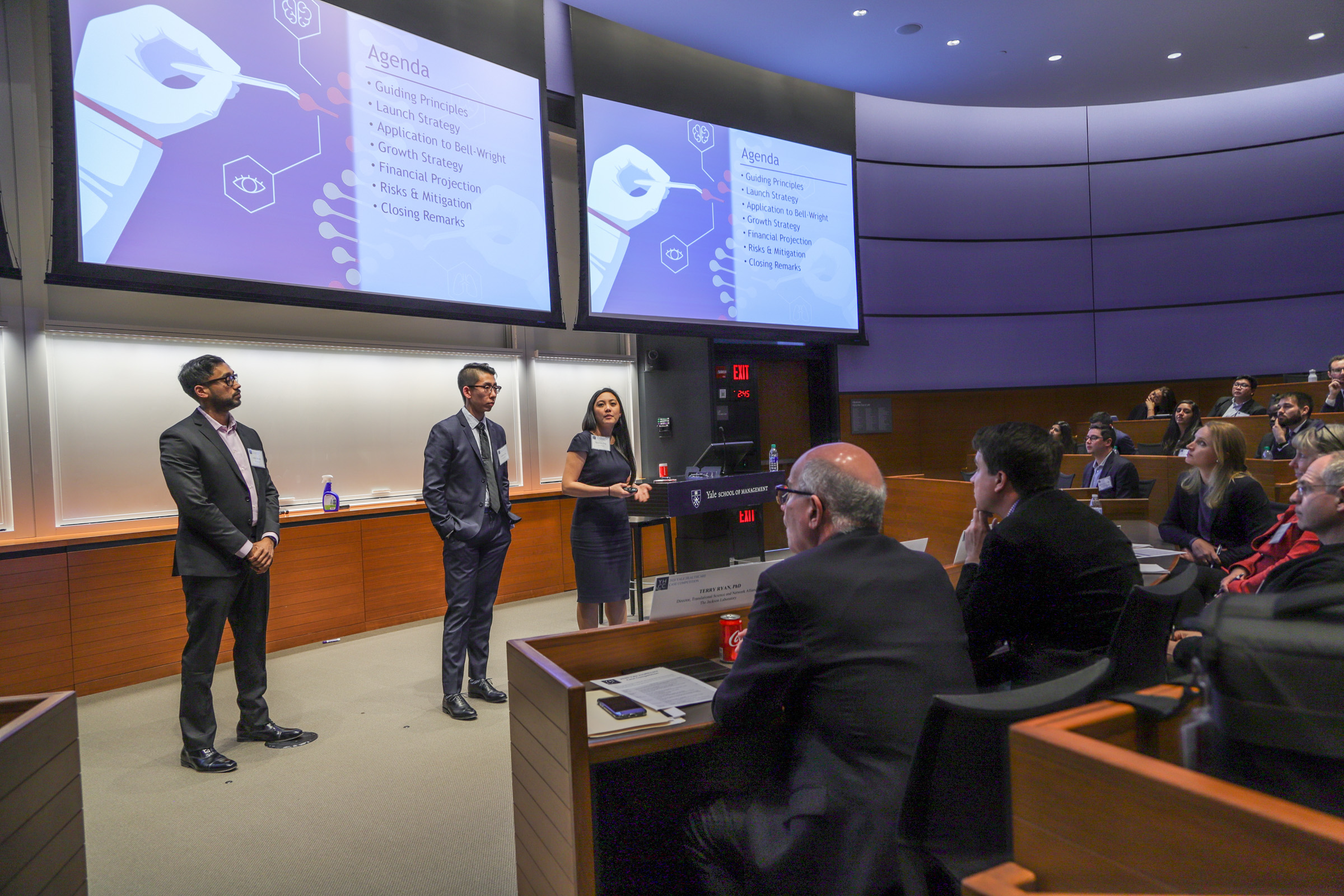
The Yale School of Management will host the 12th annual Business School Alliance for Health Management (BAHM)competition on February 24, 2023, as part of the Yale Healthcare Services Innovation (YHSI) Case Competition.
YHSI is a student-organized event focused on bringing innovation to healthcare delivery. BAHM is an international consortium of 21 MBA programs dedicated to advancing thought leadership and education in the global health sector.
“We are excited to partner with BAHM and invite teams from around the world to propose care delivery solutions to a business challenge laid out by the competition sponsor,” said Hallie Whitman ’23, a joint-degree student at SOM and the School of Public Health, who is co-chairing the event with School of Public Health student Hargobind Khalsa ’23.
This year’s sponsor isRHA Health Services, an organization that provides support services to individuals living with intellectual and developmental disabilities.
Studentteams from member schools in the U.S., Canada, Costa Rica, India, Kenya, and Spain are invited to participate.As co-chairs, Whitman and Hargobind are responsible for leading all aspects of the content development, logistics, and marketing for the competition, supported by a team of student leaders.
“It’s an honor for Yale to host the BAHM Case Competition this year,” Whitman said. “We’re thrilled to bring students from around the world together at SOM to focus on bringing innovative solutions to real-world business challenges in care delivery.”
BAHM has held case competitions since 2011. The events offer students the opportunity to receive cash prizes, possible academic credit, and to meet students from other BAHM schools. Competitions are hosted each year by a different BAHM school or a group of schools.
District Attorney Mike Hestrin said the agency wants the case of People v. Jose Luis Tapia returned to the docket for trial. It involves a machete assault that occurred in the Blythe area.
Prosecutors filed an emergency writ at the end of last week, notifying the Fourth District Court of Appeal in Riverside that they are challenging the trial court's decision to boot the matter and are prepared to argue the merits of continuing proceedings, rather than permit the defendant to walk away without answering the charges.
Tapia's is one of an estimated 350 criminal cases dismissed since Oct. 10 by judges countywide, citing lack of available judicial resources -- or courtroom space -- to receive a speedy disposition by trial, as guaranteed under the state constitution.
The matter is one of roughly 2,800 cases that piled onto county courts' dockets going back to when the Office of the Chief Justice of California changed courts' operations statewide in 2020, permitting ongoing postponements, amid the lockdowns.
However, all of the chief justice's emergency orders expired on Oct. 7.
"Unless the courts stop these dismissals, the backlog of criminal cases will grow, and our justice system will be in danger of collapse,'' Hestrin said in a video message released last week.
The majority of cases dismissed to date have been domestic violence matters.
"When a judge dismisses a domestic violence case, they also terminate the victim's criminal protective order. This is nothing less than an injustice and a disservice to the victims and to public safety,'' Hestrin said.
"I share others' frustration when a case is not resolved on the merits, or due process is impaired, due to a lack of available judicial resources," Monterosso said. "The genesis of the current set of circumstances
is the chronic and generational lack of judges allocated to serve Riverside County."
He emphasized that the county has 90 authorized and funded judicial positions, but a 2020 Judicial Needs Assessment Study noted that 115 judicial officers are needed to ensure efficient operations throughout the local court system and prevent logjams.
"The dispensing of statutory timelines for criminal trials under the emergency orders delayed the `day in court' for numerous criminal defendants and those impacted by the alleged crimes," Monterosso said. "While the law allows a court to continue a case beyond the statutory deadline for `good cause,' the decision on whether `good cause' exists is an individualized decision made by the trial judge based on the law and the facts of the case."
Hestrin sympathized with the fact "we have far fewer ... judicial seats than we need based on population."
"But this has been the case as far back as anyone can remember,'' he said. "Before the pandemic, we had not had a criminal case dismissed for lack of a courtroom in over a decade."
He said defendants whose cases have been repeatedly delayed are watching the current drama unfold and "have no incentive to resolve any matter before trial'' as long as there's a possibility that holding out will ultimately lead to a dismissal.
"This situation is unsustainable and constitutes a danger to the public,'' Hestrin said. "We're not asking for a specific outcome. We're asking judges to engage with the facts of the cases and backlog."
Monterosso countered that judges are redoubling efforts to accommodate trial requests, often times summoning prospective jurors for screening late on weekdays to courtrooms where juries in other matters are still deliberating.
However, Hestrin said earlier this month, 500 prospective jurors slated to be assigned courtrooms were sent home, with judges refusing to entertain requests for "brief" postponements until courtrooms became available.
"(This) seems like mismanagement of resources," the D.A. said. "If we have an emergency in our courts that justifies a dismissal of a felony, then it should be an emergency in every courtroom across the county and should justify an all-hands-on-deck approach to trying cases."
He recommended longer hours each weekday, the start-up of night courts and even weekend court hours to plow through the backlog. It was unknown what costs in overtime and other budget pressures those actions might precipitate.
The current backlog is reminiscent of the cumulative impact of a buildup of unresolved criminal cases in 2007 that prompted the state to dispatch a judicial strike team to the county to help sort through criminal cases clogging the court system.
At the time, the Superior Court virtually halted civil jury trials for months while judges focused on reducing the strain on resources. An empty elementary school was even converted into a makeshift courthouse.
WASHINGTON (AP) — The Supreme Court will take up the issue of affirmative action again Monday — the second time in six years — but with the conservative majority now generally expected to end the use of race in higher education admissions.
That would be a major shift for the court, which first ruled in favor of affirmative action policies in admissions in 1978. The earlier cases on affirmation action are each known by a single name: Bakke, Grutter, Gratz and Fisher.
During arguments Monday in cases involving North Carolina and Harvard, those names may be used as shorthand for the cases they represent. But real people are behind them.
A look at what they have done since the Supreme Court made their names synonymous with the issue of race in higher education:
Allan Bakke was in his 30s when he applied to the medical school at the University of California, Davis. Rejected twice, Bakke sued. He said the school’s decision to set aside 16 seats for minority students in a class of 100 discriminated against him as a white man. The Supreme Court agreed and ordered him admitted. But the court allowed the use of race as a factor in admission if it was part of an overall evaluation of an applicant. Bakke graduated in 1982 and worked for years as an anesthesiologist in Minnesota. He has kept out of the spotlight since his case.
Barbara Grutter was Michigan resident who applied to the University of Michigan Law School in 1996. Grutter, who is white, had a 3.8 grade point average but was rejected. She sued for discrimination, claiming the school’s policies gave certain minority students a significantly greater chance of admission. The Supreme Court said in a 5-4 decision that the law school’s admissions policy, which considered race as one factor in admissions, was not illegal. The decision allowed the continued use of race in admissions.
The Bollinger in the case was Lee Bollinger, who was sued in his capacity as the university’s then-president. Bollinger, now Columbia University’s president, told reporters recently that he is “worried about the outcome” of the current cases.
The companion case to Grutter’s involved Jennifer Gratz, a white woman denied undergraduate admission to Michigan. Unlike Grutter, Gratz won her case. The Supreme Court agreed that the school’s undergraduate admissions system was flawed because it relied too heavily on race.
Frustrated that affirmative action survived anyway, Gratz was instrumental in Michigan’s passage of Proposal 2, which ended race-based preferences in state university admissions. The ban survived its own trip to the Supreme Court. Gratz went on to open a microbrewery in Florida with her husband.
Abigail Fisher is Supreme Court famous twice over. Fisher, who is white, sued after being rejected in 2008 from the University of Texas at Austin. A cello player who also participated in math competitions and did volunteer work, she graduated just shy of the top 10% of her class. She argued the university’s policy discriminated against her because of race, in violation of the Constitution.
Her first Supreme Court case was inconclusive. Three years later, when her case returned to the court, the justices in a narrow ruling upheld the school’s use of affirmative action. Only seven justices ruled in the case, however, because Justice Antonin Scalia had died and Justice Elena Kagan was recused.
Fisher, who has called herself an “introverted person,” graduated from Louisiana State University in 2012 and worked in finance, but she hasn’t given up on the affirmative action issue. Now in her 30s she’s one of the leaders of Students for Fair Admissions, the group that brought the UNC and Harvard cases to the high court. The group’s head is Edward Blum, a former stockbroker who also financially backed Fisher’s original case and other race-based Supreme Court cases.
A jury found that the man, Michael A. Riley, 51, had deleted Facebook messages in which he offered advice to a Jan. 6 rioter about how to avoid getting caught, prosecutors said.
A former U.S. Capitol Police officer was found guilty on Friday of obstruction of justice for trying to cover up the fact that he had sent Facebook messages to a Jan. 6 rioter offering advice on how to avoid getting caught, the authorities said.
The man, Michael A. Riley, 51, could face up to 20 years in prison, following a trial in U.S. District Court in Washington, federal prosecutors said. A jury was unable to reach a verdict on another obstruction of justice charge related to Mr. Riley’s communication with the rioter, federal prosecutors said. It was not immediately clear whether prosecutors intend to retry him on that count.
Mr. Riley, a member of the agency’s K-9 unit with more than 25 years on the force, was the only Capitol Police officer charged with a crime in connection with the attack on the Capitol, when many of his fellow officers were beaten by a mob of Trump followers spurred on by the lie of widespread election fraud.
Christopher Macchiaroli, a lawyer for Mr. Riley, said Friday night that his client had not obstructed a grand jury proceeding and would appeal the guilty verdict if it stands. He said that the federal judge on the case, Amy Berman Jackson, had yet to rule on a motion for judgment of acquittal.
On Jan. 6, 2021, Mr. Riley was not working at the Capitol building during the attack, but he was aware it was taking place and responded after reports of an explosive device near the Capitol complex, according to a statement Friday from the U.S. Attorney’s Office for the District of Columbia.
The day after the attack, a Facebook friend of Mr. Riley’s with whom he had never exchanged messages posted images on the social media site of himself inside the Capitol during the attack, according to a federal indictment from October 2021. The indictment said that Mr. Riley did not know the man personally but had become acquainted through their mutual interest in fishing.
Rather than forwarding the information to the authorities, prosecutors said, Mr. Riley sent the rioter — who was not named in the indictment — a private message with advice about how to avoid being caught.
“I’m a Capitol Police officer who agrees with your political stance,” the officer wrote to the man, according to the indictment. “Take down the part about being in the building they are currently investigating and everyone who was in the building” is going to be charged, he wrote. “Just looking out!”
Mr. Riley and the man exchanged dozens of messages that day and hundreds in the following days, prosecutors said.
“I’m glad you got out of there unscathed,” Mr. Riley wrote at one point. “We had over 50 officers hurt, some pretty bad.”
On Jan. 20, 2021, the unidentified man turned himself in to the police and told them he had been talking with Mr. Riley, then warned the officer that federal law enforcement officials were aware they had been communicating.
“The F.B.I. was very curious that I had been speaking to you if they haven’t already asked you about me they are gonna,” the man wrote to Mr. Riley, according to the indictment. “They took my phone and downloaded everything.”
After receiving that message, Mr. Riley deleted all his Facebook messages with the man, and the next day, sent him a final Facebook message, according to the indictment. Prosecutors said the last message was Mr. Riley’s attempt at a cover story, in which he pretended to scold the rioter for his conduct.
“Another mutual friend was talking about you last night,” he wrote. “I tried to defend you but then he showed me a video of you in the Capitol smoking weed and acting like a moron. I have to say, I was shocked and dumbfounded, since your story of getting pushed in the building with no other choice now seems not only false but is a complete lie. I feel like a moron for believing you.”
On Monday, the Supreme Court will hear arguments in a case to decide whether race-conscious admissions policies at Harvard College and the University of North Carolina can continue. The court has for more than four decades upheld policies like those at Harvard, which consider race as one factor among many in admissions, and recognized that schools have a compelling interest in achieving the benefits associated with a diverse student body. This is a closely watched case that could affect colleges and universities nationwide. Here are some commonly asked questions and answers.
What is the case about?
The lawsuit was brought by Students for Fair Admissions, Inc. (SFFA), an Arlington, Virginia, nonprofit founded by Edward Blum, who has mounted several legal challenges to race-conscious admissions policies and voting rights laws in recent decades. In 2008, Blum was part of a lawsuit against the University of Texas at Austin over its use of race in admissions. The Supreme Court upheld UT’s admissions policies in 2016, the last time the Court ruled on the issue. SFFA claims that Harvard College deliberately discriminated against Asian American applicants because of their race and considers race in ways that violate Title VI of the Civil Rights Act of 1964.
How did we get here?
On Oct. 1, 2019, after a three-week trial, the U.S. District Court in Boston ruled that Harvard does not discriminate and that its consideration of race complied with longstanding Supreme Court precedent. SFFA appealed the decision. On Nov. 12, 2020, the First Circuit Court of Appeals upheld the District Court decision, rejecting SFFA’s arguments and affirming judgment for Harvard on all counts. SFFA again appealed the decision, this time to the U.S. Supreme Court. In January, the Court said it would consider the case, along with another case SFFA filed against the University of North Carolina, during its 2022-2023 term.
What’s at stake?
Harvard and the University of North Carolina are the named defendants, but should SFFA prevail, the Court’s decision would affect all colleges and universities nationwide that consider race as one factor among many in their admissions process. SFFA has asked the Court to reverse long-established precedent and prohibit any consideration of race in admissions.
In past cases, both the Supreme Court and lower courts have consistently ruled that colleges and universities may retain the ability to consider race as one of many factors for admission to create the diverse communities critical to their educational missions. Higher education leaders argue that such communities are necessary to prepare students to live and work in a world that is becoming increasingly pluralistic and global.
How does Harvard consider race during admission?
Admissions at Harvard are highly competitive. This year, 61,000 applicants vied for fewer than 2,000 spots in the Class of 2026. The process involves a comprehensive, whole-person review of each applicant requiring months to complete. Admissions officers examine and consider a range of information, including academic achievements and extracurricular activities. Personal essays, recommendations from teachers and guidance counselors, and applicant interviews are also considered by a diverse, 40-person committee. Race is one factor in determining what makes an applicant unique and what they might bring to the Harvard community. Testimony at trial established that race only ever functions as a plus factor and is never used to deny qualified applicants’ admission.
How wide is the support for Harvard?
Current and former Harvard students, represented by the Asian American Justice Center, the Lawyers’ Committee for Civil Rights, and the NAACP Legal Defense and Educational Fund testified during the trial in support of Harvard and the importance of a diverse student body. Not a single student testified on behalf of SFFA.
In the First Circuit, 25 Harvard student and alumni organizations representing thousands of Asian American, Black, Latinx, Native American, and white Harvard community members filed an amicus brief in support of the University. Nearly 700 social scientists, leading economists, higher-education experts, attorneys general from 15 states, and 37 colleges and universities also wrote in support. Other backers include the Asian American Legal Defense and Education Fund, American Council on Education, Anti-Defamation League, and several multinational corporations, including Apple, General Electric, Intel, Microsoft, and Verizon.
A broad coalition of major corporations, higher education organizations, and legal, religious, military, and civil rights groups voiced their strong support for Harvard in briefs submitted with the Supreme Court this summer.
How has the Supreme Court viewed Harvard’s process in the past?
Twice, the Court has cited Harvard as a model for other colleges and universities. The College’s qualified, limited use of race is entirely consistent with Supreme Court precedent in the issue, established in Bakke (1978), affirmed in Grutter (2003), and reaffirmed in Fisher I (2013) and Fisher II (2016).
What might future Harvard classes look like in a race-blind system?
The proportion of the class that identifies as African American and Hispanic would decline significantly if Harvard eliminated race as a factor in admissions, evidence presented at trial showed. Additionally, when experts simulated the racial makeup of the class, replacing the consideration of race with “race-neutral alternatives,” they found that Harvard would not be able to reach the same levels of diversity it achieved through the limited consideration of race as one factor among many.
[Non-party Jane] Roe's earlier reports of sexual assault by Plaintiff John Doe prompted Defendant TCU's institution of Title IX disciplinary proceedings against him and, in turn, gave rise to this suit…. [Doe subpoenaed Roe] to appear for deposition.
Roe argues that requiring her to appear for an in-person deposition would produce only irrelevant, duplicative testimony, given that she has already testified exhaustively on the record produced in the Title IX disciplinary proceedings. She argues that any information she possesses has no bearing on any of Doe's claims—erroneous outcome, selective enforcement, or gender bias—and that the Court's consideration should be confined to the disciplinary record. Second, Roe claims that compelling her testimony would impose an undue burden in the form of "significant emotional harm and trauma" by forcing her to relive the experiences giving rise to her sexual assault allegations.
Doe argues that it is essential to depose Roe—who is designated as a key witness by both parties to the suit—because she has personal knowledge and information "relevant to the fairness and thoroughness of the process from its inception to its end," including information about the myriad interviews, meetings, and investigation that TCU conducted prior to and during the proceedings to which she was a party or witness; and information shedding light on her own credibility, including her motives for and manner of reporting. Doe also claims that Roe's evidence that compelling her testimony would impose an undue burden is insufficient and that she must therefore be deposed….
The Court finds that Doe's need to discover information about interviews, meetings with TCU officials, the investigation, the panel hearing, and the appeal in which she participated directly or as a witness are relevant to Doe's claims as it may shed light on both the accuracy of the outcome of the disciplinary proceeding (erroneous outcome) and TCU's potentially disparate treatment of Roe (a female) and Doe (a male) throughout the investigation and proceedings (gender bias; selective enforcement). Information reflecting on Roe's credibility—including potential motives to lie or to report, contradictory statements, and conversations with others throughout the process—is similarly relevant to Doe's claim of erroneous outcome.
Having considered her evidence, the Court recognizes that Roe's deposition will necessarily impose some hardship on her given the sensitive nature of the case. However, with the following limitations, the Court finds that allowing the deposition would not impose an undue burden and that it is justified in light of Doe's need to obtain the information.
In the intervening two weeks between the Court's first Order and her motion to reconsider, Roe obtained a second opinion from a treating professional that indicates requiring Roe to sit for a deposition "could be a trauma trigger," could cause Roe "distress," could "negatively impact her mental health," and "may cause her progress [made in counseling] to stall and fall behind." Primarily based on this treating professional's opinion, Roe asks the Court to reconsider its previous decision and to quash the deposition in its entirety….
[But w]hen considering Roe's initial motion to quash, the Court weighed Doe's need for Roe's testimony with the significant burden obtaining it would likely impose on her (according to her first treating professional, Kim Garrett). There the Court found that crafting parameters for the deposition, rather than completely quashing it, was an appropriate remedy in light of Doe's considerable need for information highly relevant to his dispute with TCU. The Court made this determination despite Ms. Garrett's unequivocal opinion that a deposition would, "to a reasonable degree of professional certainty," cause Roe "significant emotional harm and trauma." The declaration of Roe's second treating professional, which provides a more modest assessment that a deposition "may" or "could" be detrimental to Roe's well-being, does not alter the Court's undue burden analysis….
Again, the Court recognizes that permitting Roe's deposition to proceed will impose some degree of hardship on her given the sensitive nature of the instant dispute. The burden that necessarily comes with being deposed about one's allegations of sexual assault is not lost on the Court.
Still, the Court finds that the burden imposed is not so unreasonable and oppressive that it outweighs Doe's substantial need to obtain relevant information from Roe regarding the underlying allegations that gave rise to this lawsuit. And with the conditions previously imposed on the deposition—in addition to Doe's subsequent agreement not to appear in-person at the deposition—the Court finds that modifying the subpoena, rather than quashing it outright, is the appropriate remedy. Accordingly, the Court ORDERS that Roe's deposition be subject to the following conditions [which are similar to the ones in the original order -EV]:
The single deposition shall occur at a neutral site (as agreed by the parties);
The deposition shall be limited to 4 hours total;
No more than two attorneys may be present for either party (as agreed by the parties);
Roe shall be entitled to have one party present aside from counsel;
Doe may not seek any information from Roe regarding her prior sexual history with anyone other than Doe and is ORDERED to refrain from seeking information for the purpose of embarrassment, harassment, or other improper means.
Article From & Read More ( Plaintiff in Title IX Wrongful Discipline Case Against University May Depose His Accuser - Reason )
https://ift.tt/GBHjLve
Case
Here's a Best Buy Early Black Friday deal that'd make a great stocking stuff for any Pokemon fan. Best Buy is offering an officially licensed Pokemon: The Card Game Pencil Case, which also includes two Pokemon TCG Booster Packs, for only $6.99. A Pokemon TCG booster pack costs $3.99. That basically means you're saving $1 off the two booster packs and getting the pencil case for free. If you were planning to bolster your Pokemon battle deck anyways, then you might as well get the discount and the freebie.
Pokemon TCG Pencil Case + 2 Booster Packs for $6.99
Pokemon TCG Pencil Case (Includes 2 Booster Packs)
30% off $9.99
You can get free shipping on orders over $35. If you can't get your order total that high, we'd suggest choosing in-store pickup at a Best Buy location to avoid the shipping fee.
On Tuesday, a Moscow court rejected Brittney Griner's appeal of her nine-year sentence on drug charges, a completely anticipated result in a trial that U.S. and international officials have called an illegitimate proceeding -- as reported by ESPN's T.J. Quinn.
U.S. officials have said they believe Russia will eventually send the WNBA star home in a prisoner swap but have expressed frustration over what they say is Russia's failure to respond to the "significant" offer the United States made in June.
Griner's absence has continued to weigh on all those in the basketball community who know and care about her as each milestone date has passed in 2022.
So much time has passed. Griner has missed the start of the WNBA season, the All-Star Game, the beginning of the playoffs and the FIBA World Championship. She was expected to be part of all of it, just as she had been for the past decade as a star center for the Phoenix Mercury and the U.S. women's national team.
Instead, the 2013 No. 1 draft pick and NCAA, WNBA and Olympic champion has been detained in Russia since being arrested in February on charges that she brought vape cartridges carrying a small amount of cannabis oil into the country. Griner was sentenced to nine years in prison in August, and her appeal was denied Oct. 25, 250 days since she was arrested.
The United States continues to try to negotiate for her freedom, along with that of fellow American prisoner Paul Whelan. Griner's fellow professional basketball players, in both the WNBA and NBA, keep saying her name. NBA Finals MVP Stephen Curry gave public support to Griner on Oct. 18, her 32nd birthday and the night of the Golden State Warriors' ring ceremony, telling the crowd, "We hope that she comes home soon, and that everybody's doing their part to get her home."
Griner's ordeal began as she was returning to Russia to finish her overseas season there. When it will end -- and how the lengthy detention will affect the rest of her life and career -- is unknown. Here is a look at the events of the past eight months while Griner has been imprisoned, and how the White House and those closest to her, have tried to do all they can to bring her home.
play
4:39
Sparks player and WNBPA president Nneka Ogwumike reacts to Brittney Griner's nine-year prison sentence being upheld.
February 17: Mercury star is detained
While traveling to Russia to play overseas in the offseason, Griner is detained at Sheremetyevo Airport outside of Moscow after customs officials allege they found vape cartridges that contained oil derived from cannabis in her luggage. Griner was returning to play for club team UMMC Ekaterinburg in Russia, where she has competed in the WNBA offseason since 2014. There is no public announcement of her arrest.
February 24: Russia invades Ukraine
Russian military forces, on the orders of Vladimir Putin, invade Ukraine, triggering a series of harsh economic sanctions from the United States and other western nations that complicate efforts by U.S. officials to bring Griner home.
March 5: News breaks of Griner's detainment
The Russian Federal Customs Service, as first reported by the New York Times, announces it has Griner in custody on drug charges. The WNBA and Griner's agent say they are working to get her home. Griner faces a maximum sentence of 10 years; Russia has harsh drug laws with no exceptions for cannabis under any circumstances.
March 6: U.S. Secretary of State discusses Griner's detainment
Secretary of State Antony Blinken says the United States will "provide every possible assistance" to citizens who are being held in foreign countries. "We have an embassy team that's working on the cases of other Americans who are detained in Russia," he adds. "We're doing everything we can to see to it that their rights are upheld and respected."
March 17: Griner's detention extended
Russian media reports that Griner's detention has been extended until May 19, which means she will be held at least three months before her case is resolved. The prosecutor requested the detention to continue investigating Griner's case.
March 17: U.S. State Dept. tells ESPN it has not had access to Griner
Although she has been detained a month, U.S. officials say they still haven't spoken to Griner since she was arrested. A State Department official issues a statement to ESPN, saying, "We insist the Russian government provide consular access to all U.S. citizen detainees in Russia, including those in pre-trial detention, as Brittney Griner is."
The source close to Griner said they have gotten frequent updates on her from her team of Russian attorneys. "I wouldn't say she's 'good,' but she's OK," the source said.
The statement marks a slight but significant change in the government's tone when it comes to Griner. Until now the government has deliberately kept a low profile with her case, hoping not to increase her profile to the point where she might become a valuable political asset to the Russian government. It generally has avoided commenting at all, and when Blinken was asked about Griner at a news conference last week he gave a tepid statement that did not mention her by name.
Based on State Department guidance, Griner's representatives have asked the WNBA, NBA, the media and Griner's supporters generally to keep any attention to her case "on a low simmer," as one source said.
March 23: U.S. officials meet with Griner
U.S. consular officials visit with Griner in Russia for the first time, reporting she is doing "well." The U.S. State Department had said Russian officials were denying them access to Griner and two American men who are in custody, contrary to international law requirements.
March 30: WNBA players break silence on Griner
Hesitant to talk about Griner's detention and potentially hurt her case, WNBA players have said little since her arrest, but Breanna Stewart and Angel McCoughtry discuss WNBA salaries and why a handful of players head to Russia every offseason.
"The big thing is the fact that we have to go over there. It was BG, but it could have been anybody," Breanna Stewart, who earns over $1 million to play in Russia, told The Associated Press. "WNBA players need to be valued in their country and they won't have to play overseas."
Per the WNBA's collective bargaining agreement, which runs through 2027, players are paid an average of $130,000, with top players able to earn more than $500,000 through salary, marketing agreements, an in-season tournament and bonuses.
April 11: WNBA commissioner assures league working toward Griner's return
"This is an unimaginable situation for BG to be in," the WNBA commissioner said. "She continues to have our full support. Certainly, we're trying everything we can, every angle, working with her legal representation, her agent, elected leaders, the administration. Just everybody in our ecosystem to try and find ways to get her home safely and as quickly as we can."
Engelbert also announces that Griner's "BG's Heart and Sole" shoe drive, which has collected new and gently used shoes for homeless people in Phoenix, will be held in all 12 WNBA cities throughout the upcoming season.
April 27: Former U.S. Marine released from Russian custody in prisoner exchange
Trevor Reed, a former U.S. Marine who has been held in Russia since August 2019, is unexpectedly released from Russian custody in exchange for Russian national Konstantin Yaroshenko, who was serving a 20-year sentence in the United States for smuggling drugs. The exchange is the first hopeful sign for Griner's family that a diplomatic channel remains open between the two countries despite the war in Ukraine.
May 3: U.S. Department of State declares Griner a wrongful detainee
The U.S. government now considers Griner to be "wrongfully detained" by the Russian government, signaling a significant shift in how officials will try to get her home. The United States will seek to negotiate her release rather than wait for the Russian case against her to come to a conclusion.
Additionally, Griner's supporters have kept a low profile up to this point in the event she might be released before facing trial. But after the announcement, they actively press the White House to bring her home. Sources say Bill Richardson, the former U.S. ambassador to the United Nations (and former governor, cabinet member and congressman), is working with his organization to secure Griner's release.
May 3: WNBA announces it will honor Griner with season-long tribute
At the same time, the Russian state news agency TASS publishes a story saying there were negotiations between the United States and Russia to exchange Griner for Viktor Bout, a Russian man serving a 25-year sentence in the United States for financing terrorism. American government officials, speaking to ESPN, express skepticism about the reporting, saying it was likely a tactic to pressure the U.S. government.
play
1:18
NBA commissioner Adam Silver details the league's efforts to try and grant Brittney Griner's release from Russia.
May 17: NBA commissioner says league working to bring Griner home
NBA commissioner Adam Silver tells ESPN's Malika Andrews that the league is working "side by side" with WNBA commissioner Cathy Engelbert to bring Griner home, adding that the NBA was following the advice of experts when it did not take an aggressive approach during the early stages of Griner's detention in Russia.
"We've been in touch with the White House, the State Department, hostage negotiators, every level of government and also through the private sector as well," Silver said. "Our No. 1 priority is her health and safety and making sure that she gets out of Russia."
May 20: State Department continues to push for regular contact with Griner
For the second time in a week, a consular officer gains access to Griner, but the State Department maintains that sporadic visits with the WNBA star are not sufficient.
"Our message is a clear and simple one: We continue to insist that Russia allow consistent and timely consular access to all U.S. citizen detainees," State Department representative Ned Price said. "One-off visits are not sufficient, and we will continue to call on Moscow to uphold its commitments under the Vienna Convention for consistent and timely access as well."
May 25: Cherelle Griner calls on President Biden to help bring Griner home
In her first televised interviews since Griner was detained, Cherelle Griner says she hasn't spoken to wife Brittney Griner since Feb. 17, the day the WNBA star was arrested in Russia.
"There is one person that can go get her, and that's our president," Griner told Angela Rye in an interview on ESPN. "He has that power. You know, I'm just like, 'Why are we not using it? Like, urgently, use it.' We're expecting him to use his power to get it done."
Early June: United States secretly offers Russia a trade for Griner's release
The United States secretly offers to trade Bout for Griner and Paul Wheln -- another American considered to be wrongfully detained and who has been in Russian custody on espionage charges since December 2018. The offer is not reported until late July.
play
1:01
Wife of WNBA star Brittney Griner claims no one was there to pick up Griner's calls because the phones at the U.S. Embassy were unstaffed.
June 20: Cherelle Griner: 'Zero trust in our government' after Griner's calls go unanswered due to logistical errors
More than four months since they last spoke on the phone, Griner was expected to call wife Cherelle Griner on the couple's fourth wedding anniversary on June 18. But more than a dozen calls from Griner went unanswered through the U.S. Embassy in Moscow, which the couple had been told would patch the call through to Cherelle Griner in Phoenix. Instead, the calls went unanswered because the desk at the embassy where the phone rang was apparently unstaffed Saturday, Cherelle Griner said.
"We deeply regret that Brittney Griner was unable to speak with her wife because of a logistical error," the State Department said Monday.
"I find it unacceptable and I have zero trust in our government right now," Cherelle Griner told The Associated Press. "If I can't trust you to catch a Saturday call outside of business hours, how can I trust you to actually be negotiating on my wife's behalf to come home?"
The following day, Biden administration officials said the call was rescheduled.
July 1: Griner's trial begins
The trial opens in Khimki, a Moscow suburb, on charges that Griner tried to smuggle drugs into Russia. The trial is adjourned until July 7.
play
2:10
White House officials have confirmed that President Joe Biden has read the handwritten letter from Brittney Griner appealing for her freedom.
"I'm terrified I might be here forever," Griner writes in an excerpt released by her representatives. "I realize you are dealing with so much, but please don't forget about me and the other detainees."
Citing her father's military service, Griner writes the Fourth of July has new meaning to her. "It hurts thinking about how I usually celebrate this day because freedom means something completely different to me this year."
July 6: Biden, Harris call Cherelle Griner
President Joe Biden and Vice President Kamala Harris speak with Cherelle Griner to reassure her that they are working to win Griner's freedom as soon as possible, the White House said.
Cherelle Griner, who also speaks at a rally in Phoenix later that day, says, "I am hopeful in knowing that the President read my wife's letter and took the time to respond. I know BG will be able to find comfort in knowing she has not been forgotten."
play
0:45
Cherelle Griner speaks at a rally about her wife, Brittney, and how much she wants her to return home.
July 7: Griner pleads guilty to drug charges
Griner pleads guilty but says she accidentally brought hashish oil into Russia and did not intend to break the law. Under Russian law, admitting guilt doesn't automatically end a trial, which will continue until the entire prosecutor's case is read into the record. Witnesses also are called. The guilty plea is viewed by experts as a strategic move since the overwhelming majority of cases end in convictions.
July 10: WNBA honors Griner at 2022 WNBA All-Star Game
The WNBA All-Stars each wear Griner's No. 42 jersey in the second half of the midseason showcase. Griner was named an honorary All-Star when rosters were released June 22.
Prior to the All-Star Game, Nneka Ogwumike, the president of the WNBA players' association, joined Cherelle Griner, the Rev. Al Sharpton, Seattle Storm star Sue Bird and union leader Terri Jackson for a news conference calling for mercy in Brittney Griner's sentencing and focusing on her humanity.
July 14: Russian teammate, GM support Griner in court
Griner has been an exemplary player and citizen during her six seasons in Russia, two members of Griner's Russian club team tell the judge as they appear as character witnesses in her trial.
UMMC Ekaterinburg teammate Evgeniya Belyakova and Maxim Ryabkov, the team's general manager, appear during a brief afternoon court session while Griner sat in the defendants' cage not far away. Their appearance is believed to be the first in-person contact Griner has had with anyone she knows -- other than the Russian attorneys hired for her case -- since she was arrested Feb. 17.
July 15: Lawyer argues Griner allowed to use marijuana for pain
The White House announces that President Biden is signing an executive order to hold anyone involved in the wrongful detainment of an American citizen accountable. It is meant to create a deterrence for foreign governments.
play
2:33
Nneka Ogwumike, Stephen Curry and Skylar Diggins-Smith all deliver a powerful message advocating for the freedom of Brittney Griner.
July 20: Curry, Diggins-Smith, Ogwumike advocate for Griner's release at ESPYS
While honoring the WNBA for being recognized as the sports humanitarian league of the year, Nneka Ogwumike, Steph Curry and Skylar Diggins-Smith paused to encourage the sports community to continue to work to free Griner.
"BG is a WNBA champion. She's an eight-time WNBA All-Star. A national champion in college. An Olympic gold medalist," Ogwumike said. "(She's an) Athlete who has fans all over the world. A human being whose predicament demands our attention."
Added Curry: "We urge the entire global sports community to continue to stay energized on her behalf, because Brittney isn't just on the Phoenix Mercury. She isn't just on her team in Russia. She isn't just an Olympian. She's one of us."
July 27: U.S. makes 'significant' offer for prisoner swap
T.J. Quinn outlines the Biden administration's offer to Russia to bring home WNBA star Brittney Griner and another jailed American, Paul Whelan.
July 28: Russia responds: Negotiations should be kept quiet
Russian officials say that any possible prisoner swap with the United States involving Griner should be conducted without fanfare, and only after the completion of Griner's trial.
"Normally, the public learns about it when the agreements are already implemented," Kremlin spokesperson Dmitry Peskov said.
Aug. 2: WNBA players will skip playing in Russia this offseason
Former UMMC Ekaterinburg players such as Jonquel Jones and Breanna Stewart will not play in Russia this WNBA offseason.
Aug. 4: Griner found guilty, sentenced to nine years
Griner is sentenced to nine years in prison. During sentencing, Judge Anna Sotnikova says she had found that Griner intentionally broke the law and also fined her 1 million rubles (about $16,700). The conclusion of the trial is expected to allow negotiations for a prisoner swap to accelerate.
The nine-year sentence was close to the maximum of 10 years that Griner had faced under the charges; prosecutors had asked for a 9½-year sentence.
Griner's defense attorneys say they will appeal.
That same night in the WNBA, members of the Phoenix Mercury and Connecticut Sun stand arm-in-arm in a circle at halfcourt prior to their game to observe "a 42-second moment of solidarity" for Griner.
Aug. 15: Griner's defense team appeals conviction
In an expected move, Griner's lawyers Maria Blagovolina and Alexander Boykov file an appeal of her nine-year Russian prison sentence for drugs possession. After Griner's conviction, Blagovolina and Boykov said the sentence was excessive and that in similar cases, defendants have received an average sentence of about five years, with about a third of them granted parole.
Sept. 16: President Biden meets with Cherelle Griner at White House
President Joe Biden meets with Cherelle Griner and Elizabeth Whelan -- sister of detained former U.S. Marine Paul Whelan -- in separate meetings in the Oval Office to reassure the families that the detainees "are at front of mind," White House officials say.
Oct. 6: Griner at 'weakest moment' in Russia, wife says
Appearing on "CBS Mornings," Cherelle Griner says Brittney Griner is at her "absolute weakest moment in life right now" ahead of her hearing to appeal her nine-year prison sentence.
"She's very afraid about being left and forgotten in Russia," Cherelle Griner said.
Oct. 25: Russian court rejects Griner's appeal of nine-year sentence
With Griner appearing via videoconference, a Moscow court rejects her appeal of her nine-year sentence on drug charges, an anticipated result in a trial that U.S. and international officials have called an illegitimate proceeding.
Several officials have said in recent weeks that they believe Russia will not engage seriously in negotiations for a prisoner exchange until after the U.S. midterm elections Nov. 8, not wanting to give the Biden administration a political victory.
T.J. Quinn, M.A. Voepel and The Associated Press contributed to this report.


/cloudfront-us-east-1.images.arcpublishing.com/gray/ABKB3OWORRGYXCGEK3L3RKH2U4.png)